Matcha Honey Lemon: A Script Font That’s Fresh, Casual & Crafted
When you open a font folder for a new project, you’re hunting for a personality. You want a visual voice that fits the mood you’re building, not just a pretty shape. That’s the lens I use when testing a typeface like Matcha Honey Lemon. My first impression wasn’t just about its style—it was about its temperature. This script font feels warm, approachable, and intentionally informal. It doesn’t scream luxury or vintage romance; it whispers relaxed craft and modern creativity.
The Handwritten Feel Without the Fragility
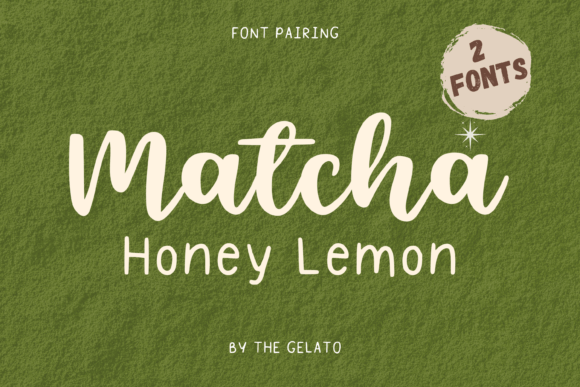
The letterforms in Matcha Honey Lemon have a distinct, consistent handwriting rhythm. The lowercase ‘a’ with its open bowl, the playful tail on the ‘y’, and the gentle bounce in connections give it a lively, human touch. But unlike many true handwritten fonts that can feel erratic or loose, this one maintains a structured baseline and clear weight consistency. That’s key for real projects. You get the personality of a handwritten font without sacrificing the cohesion needed for a professional brand identity.
Its visual personality lands somewhere between a friendly cafe chalkboard and a well-designed artisan product label. It’s casual but not sloppy; crafted but not ornate. This makes Matcha Honey Lemon a natural fit for projects that want to feel handmade, personal, or sustainably minded. Think of a small bakery’s packaging, a blogger’s signature header graphics, a craft seller’s merchandise tags, or a lifestyle brand’s social media visuals.
Where This Font Finds Its Natural Home
In practical application, Matcha Honey Lemon performs beautifully as a display font for intentional highlights. Here’s where I’ve found it shines:
- Logo design & brand marks: For businesses with a ‘handmade’, ‘organic’, or ‘creative studio’ ethos, it can form a distinctive wordmark. Its uniqueness aids brand recognition.
- Packaging design & product labels: On jars, boxes, or tags, it adds that personal, crafted touch that resonates with premium, small-batch products.
- Website headers & blog graphics: As a headline for a blog post about DIY, recipes, or creative living, it sets an inviting, engaging mood.
- Social media graphics & digital ads: For quotes, key phrases, or campaign slogans, it breaks away from generic sans serif text and boosts visual engagement.
- Printable designs & digital products: In Canva templates for invitations, flyers, or in Cricut projects for personalized gifts, it brings a cohesive, designer-curated feel.
The Places You Need to Apply Caution
Any script font with character requires strategic use. Matcha Honey Lemon is a creative font for accent and mood, not for foundation. Use it carefully in these contexts:
- Large headlines or short phrases: This is its strength. A full sentence at 48px on a poster can look fantastic.
- Supporting text or body copy: Avoid this entirely. Its readability drops sharply at small sizes and in long paragraphs.
- Uppercase-only settings: Test this. Some script fonts lose charm in all-caps; Matcha Honey Lemon’s uppercase set is clean but may not carry the same casual energy.
- Highly formal or corporate contexts: If your project demands strict professionalism or audience trust through traditional clarity, this font might undermine that. It speaks a different, more relaxed language.
The goal is to leverage its personality without letting it overwhelm your brand consistency. It should be a memorable feature, not the entire voice.
Practical Designer Notes for Real-World Testing
Before committing Matcha Honey Lemon to a client project or commercial asset, run these practical checks:
- Test it in black and white first. Color can enhance charm, but the form must hold up in mono. Does it still have character?
- Check small-size readability on a real mockup. Place it on a product label at the size it will actually be printed. If it’s blurry or unclear, reserve it for larger elements.
- Review spacing in your layout software. Adjust letter-spacing if needed for a particular logo lockup; sometimes a slight increase brings clarity.
- Try it beside a foundational serif or sans serif font. Good font pairing is crucial. Pair Matcha Honey Lemon with a clean, neutral sans serif font for body text to create a clear hierarchy and balance its energy.
- Confirm commercial licensing. As a commercial font, ensure your license covers your use—whether for client branding, digital products you sell, or merchandise. Never assume.
How It Shapes Brand Perception & Engagement
Typography is a silent ambassador. Using Matcha Honey Lemon signals a brand that values creativity, personal touch, and a less-formal relationship with its audience. In editorial design for a niche magazine, it can frame articles with a warm, relatable tone. In web design headers, it can make a site feel more approachable versus corporate.
For audience trust, it builds a specific kind: trust in authenticity and craft. For a marketer targeting a community of makers or enthusiasts, this can be powerful. For a brand owner in a saturated market, a distinctive typeface like this aids visual recognition instantly.
However, misuse harms professionalism. Using it for legal disclaimers or dense informational text would confuse and frustrate readers. Its role is to set a visual mood and capture attention, then let more readable typefaces do the heavy lifting of communication.
The Final Take for Your Toolkit
Matcha Honey Lemon from the Script Amp category is a font with a clear, useful personality. It’s not a versatile Swiss Army knife, but a specialized tool for projects that need a fresh, casual, and crafted voice. In the right context—as a logo for a creative studio, on the packaging of a specialty food product, or as the headline font for a lifestyle blog’s graphics—it delivers unique charm and modern typography appeal.
Approach it as a designer: test it rigorously, pair it thoughtfully, and deploy it strategically. When you do, it becomes more than just a premium font in your library; it becomes a genuine design asset that helps build a cohesive, engaging, and memorable visual identity.